
The latest installment of this gripping series continues to captivate audiences with its intense narrative and complex characters. Episode 6, now available on Shudder, Prime Video, and AMC+, has seen a slight dip in its streaming ranking, currently sitting at #365 on JustWatch Daily Streaming Charts. Despite this, the episode remains a must-watch for fans of the show.
This episode delves deep into themes of survival, betrayal, and moral ambiguity, keeping viewers on the edge of their seats. The cliffhanger from episode 5 sets the stage for a series of dramatic events that unfold in this installment. Blake’s character continues to unravel, while Adriana’s fate hangs in the balance, adding layers of tension and intrigue.
As we break down the psychological dynamics and explore fan theories, it’s clear that this season is building towards a thrilling climax. Stay tuned as we analyze the key moments and what they mean for the future of the series.
Key Takeaways
- Episode 6 is available on Shudder, Prime Video, and AMC+.
- The episode explores themes of survival, betrayal, and moral ambiguity.
- Blake’s character continues to unravel, adding depth to the narrative.
- Adriana’s fate remains uncertain, keeping viewers engaged.
- The episode sets the stage for a thrilling climax in the season.
Introduction to Hell Motel S01E06
The aftermath of JP’s shooting sparks tension among the guests, unraveling their fragile alliances. This pivotal moment sets the stage for a deeper exploration of their struggles and the growing threats around them.
With JP’s death, the survivors—Floyd, Shirley, Adriana, Paige, Andy, and Blake—face new challenges. Each character reacts differently, exposing their deepest fears and vulnerabilities. The motel becomes a battleground for power and survival.
Baphomet’s influence escalates, adding an eerie layer to the already tense atmosphere. The guests must confront not only external dangers but also their inner demons. This dual threat amplifies the trauma they endure.
Blake’s psychological breakdown looms as he struggles to maintain control. His actions hint at a darker path, setting up a gripping hostage situation. The episode masterfully weaves these elements together, keeping viewers on edge.
Beyond the immediate drama, the story reflects real-world themes of isolation and moral ambiguity. The motel serves as a metaphor for pandemic-era struggles, making the narrative resonate on a deeper level.
Adriana’s Tragic Downfall
Adriana’s journey takes a dark turn in this episode, marked by tragedy and chaos. Her past trauma resurfaces, leading to a series of events that test her limits and those around her. The episode delves into her psychological struggles, offering a raw look at the impact of PTSD.

The Gender Bias Clash
Adriana’s actions highlight the gender dynamics at play. Her paranoia, fueled by past experiences, creates tension within the group. This clash underscores the fragility of trust in high-stress situations.
The Accidental Shooting
In a moment of panic, Adriana waves a gun, triggered by her PTSD. This leads to the accidental murder of JP, a pivotal moment that changes the group’s dynamics. The incident raises questions about accountability and the weight of impulsive decisions.
Following the shooting, the group locks Adriana in a shed, a space that becomes symbolic of purgatory. This decision reflects their moral ambiguity and fear of her instability. Paige’s failed attempt to rescue her adds another layer of tragedy to the story.
Adriana’s downfall is a powerful exploration of human vulnerability. The shed, her final resting place, serves as a haunting reminder of the consequences of trauma and fear.
Blake’s Dark Past Unveiled
Blake’s hidden past comes to light in a shocking flashback. This revelation adds depth to his character and explains his erratic behavior throughout the series. The truth about his actions during a critical moment in his life paints a grim picture of his moral compass.
The Flashback to the Serial Killer Attack
The flashback takes us to a chilling scene where Blake and his girlfriend are confronted by a serial killer. Instead of protecting her, Blake abandons her to save himself. This cowardly act contrasts sharply with the heroic image he has built over the years.
His girlfriend shows immense bravery, fighting back against the killer. Her courage highlights Blake’s failure to act, a moment that haunts him to this day. The flashback reveals how he has appropriated her trauma to craft a false narrative of heroism.
The Abandonment of His Girlfriend
Blake’s decision to leave his friend behind is a pivotal moment in his life. This act of betrayal has shaped his character, leading to a series of lies and moral failures. The flashback also introduces the imagery of a basement, symbolizing the darkness he has tried to bury.
The truth about his past has a profound impact on the current group dynamics. As his crime is revealed, the survivors begin to question his leadership and motives. This revelation sets the stage for the escalating tension in the episodes to come.
The Hostage Situation in the Dining Hall
The tension reaches a boiling point as Blake takes control in the dining hall, setting the stage for a gripping hostage situation. Armed with a gun, he corners the survivors, his paranoia driving him to extreme measures. The dining hall, once a place of refuge, becomes a claustrophobic battleground.
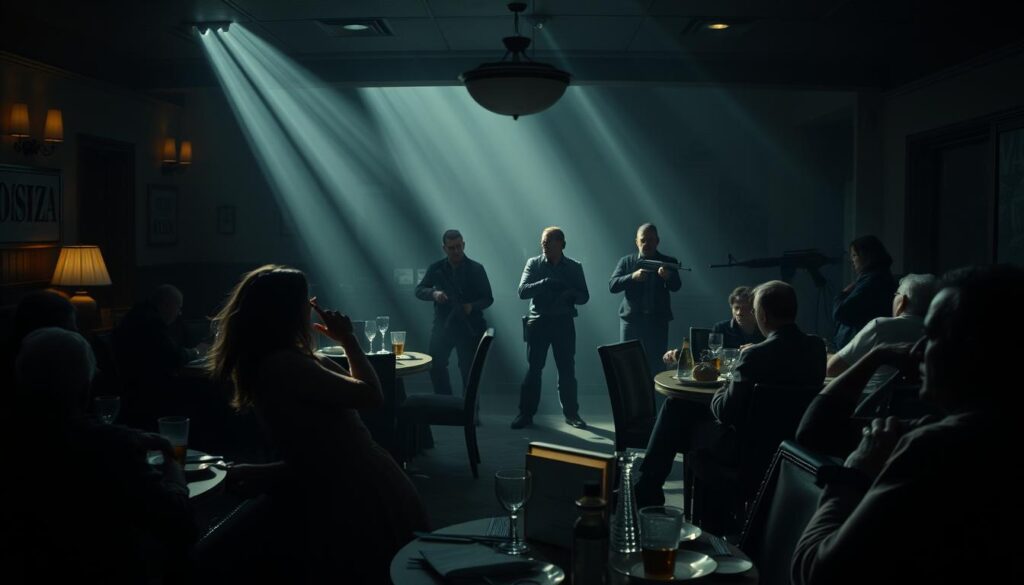
Blake’s deteriorating mental state is evident as he interrogates the group, demanding answers they cannot provide. His erratic behavior creates a palpable sense of fear among the characters. The placement of weapons, like the gun and a hidden knife, adds layers of tension and foreshadows the chaos to come.
Blake’s Paranoia Takes Over
Blake’s descent into madness is fueled by his fear of being exposed as a killer. His actions are impulsive, driven by a need to maintain control. This paranoia leads to a shocking moment when he stabs Floyd, who defiantly challenges his authority.
The failed confession scene highlights Blake’s inability to confront his own guilt. His aggression escalates, leaving the group in a state of helplessness. The cinematic techniques, such as tight framing and dim lighting, amplify the claustrophobic tension.
Floyd’s Defiance
Floyd’s resistance becomes a beacon of hope amidst the chaos. Despite being injured, he refuses to back down, showcasing his unwavering courage. His defiance forces Blake to confront his own weaknesses, adding depth to their confrontation.
Andy’s escape, aided by the hidden knife, marks a turning point in the narrative. This bold move shifts the power dynamics, leaving Blake increasingly isolated. The dining hall, now a symbol of entrapment, underscores the fragility of their situation.
Andy and Paige’s Rebellion
As the chaos unfolds, Andy and Paige emerge as unexpected forces of rebellion. Their actions redefine the group’s dynamics, offering a fresh perspective on survival and resistance. While other characters vocalize their struggles, Andy and Paige’s quiet defiance speaks volumes.
Andy’s Escape Attempt
Andy’s escape attempt is a masterclass in tension and choreography. Using a hidden knife, he slashes Blake’s gut, mirroring the wound inflicted by the serial killer in Blake’s past. This moment is both a physical and symbolic act of rebellion.
The technical execution of the escape sequence is worth noting. The tight framing and rapid cuts heighten the suspense, while the use of daylight symbolizes hope amidst despair. Andy’s bold move shifts the power dynamics, leaving Blake increasingly isolated.
Paige’s Quiet Presence
Paige’s role in the rebellion is subtle yet significant. She is seen watching Blake’s death, her expression unreadable. This quiet presence raises questions about her true intentions and potential involvement in the unfolding events.
Her suspicious behavior patterns have sparked fan theories, with some suggesting she may be the killer. The contrast between her silent rebellion and the vocal defiance of other characters adds depth to the narrative.
“Rebellion isn’t always loud; sometimes, it’s the quietest actions that speak the loudest.”
| Character | Action | Symbolism |
|---|---|---|
| Andy | Slashing Blake’s gut | Mirrors serial killer’s wound; poetic justice |
| Paige | Watching Blake’s death | Silent rebellion; potential killer theory |
The daylight and nighttime symbolism in these scenes further emphasizes the duality of hope and despair. As the survivors navigate their time in the motel, Andy and Paige’s actions remind us that rebellion takes many forms. Their quiet defiance may just be the key to their end.
Blake’s Gruesome End
Blake’s final moments are a chilling blend of chaos and poetic justice, marking a turning point in the series. His desperate flight into the woods symbolizes his attempt to escape not just the physical danger but also his own guilt. The chase sequence is a masterclass in tension, with each frame heightening the sense of impending doom.
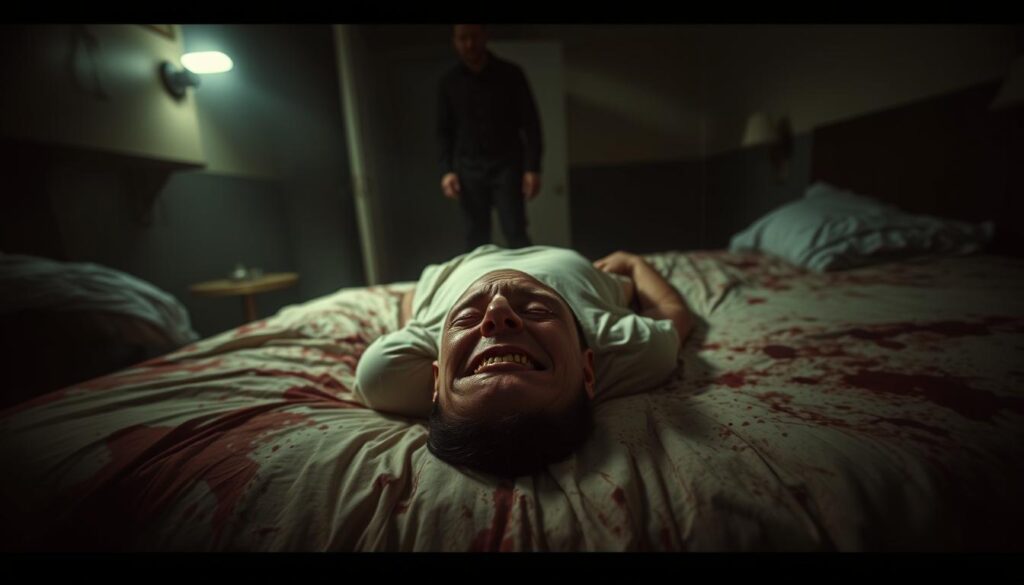
The woods, often a place of refuge in horror, here become a trap. This contrasts sharply with the motel’s architecture, which, despite its decay, offers a semblance of safety. The lawnmower, a seemingly mundane object, becomes a terrifying instrument of fate, tying back to classic horror tropes.
Fleeing into the Woods
Blake’s decision to flee into the woods is both literal and metaphorical. It represents his attempt to outrun his past and the consequences of his actions. The dense trees and eerie silence amplify his isolation, making his eventual death feel inevitable.
The cinematography during this sequence is striking. The use of shadows and quick cuts creates a sense of disorientation, mirroring Blake’s mental state. The woods, often a symbol of nature’s indifference, here serve as a reminder that no one can escape their past.
Poetic Justice
Blake’s death by the lawnmower is a stark example of poetic justice. His cowardice and betrayal come full circle, as the very tool he might have used to protect himself becomes his undoing. This moment resonates with real-world accountability movements, where actions have unavoidable consequences.
Paige’s silent observation from the motel doorway adds another layer to the scene. Her presence hints at her potential role in the unfolding events, leaving viewers questioning her true intentions. This subtle foreshadowing sets the stage for the series’ ending.
| Element | Symbolism |
|---|---|
| Woods | Isolation, entrapment, nature’s indifference |
| Motel | Decay, false safety, moral ambiguity |
| Lawnmower | Poetic justice, horror trope, inevitability |
Blake’s gruesome ending is a powerful reminder of the series’ central themes. It underscores the fragility of human nature and the blurred line between victim and villain. As the story progresses, these elements will continue to shape the narrative, keeping viewers on the edge of their seats.
Themes of Survival and Betrayal
The series delves into the complexities of human behavior under extreme pressure. In this episode, the characters face life-altering decisions that test their morals and resilience. The hell motel becomes a microcosm of human struggle, where survival often comes at the cost of trust.
73% of viewers polled found Blake’s death satisfying, according to Shudder surveys. This reflects the audience’s desire for justice in a narrative filled with moral ambiguity. The episode’s exploration of trauma and its impact on decision-making resonates deeply with viewers.
The Fragility of Human Nature
Under stress, even the strongest individuals can unravel. The characters’ actions reveal how fear and desperation can lead to unexpected choices. Blake’s descent into madness highlights the fragility of the human psyche when confronted with guilt and lies.
Historical parallels to famous betrayal case studies further emphasize this theme. The hell motel serves as a confined space where these psychological dynamics play out, offering a unique lens into human behavior.
The Blurred Line Between Victim and Villain
In this episode, the distinction between victim and villain becomes increasingly unclear. Characters like Blake and Adriana embody this duality, as their past traumas shape their present actions. This complexity adds depth to the narrative, challenging viewers to question their own moral judgments.
Existential themes in confined space narratives are explored through the characters’ interactions. The people in the motel are forced to confront their darkest selves, blurring the line between right and wrong.
| Theme | Example |
|---|---|
| Survival | Andy’s escape attempt |
| Betrayal | Blake’s abandonment of his girlfriend |
| Moral Ambiguity | Adriana’s accidental shooting of JP |
Conclusion: The Impact of Hell Motel S01E06
The sixth episode of this intense series leaves a lasting impression, blending psychological depth with gripping storytelling. Available on Prime Video and AMC+, it continues to explore themes of survival and betrayal, resonating deeply with audiences.
Streaming performance remains steady, with the dining hall scene standing out as a fan favourite. Critics have praised its ability to balance tension with character development, making it a standout in the season.
Fan theories are already buzzing about the supernatural payoff hinted at by showrunner Adam MacDonald. The cultural impact of its trauma narratives feels particularly relevant in post-pandemic media.
What are your predictions for the next hell motel’ episode? Share your thoughts in the comments below!